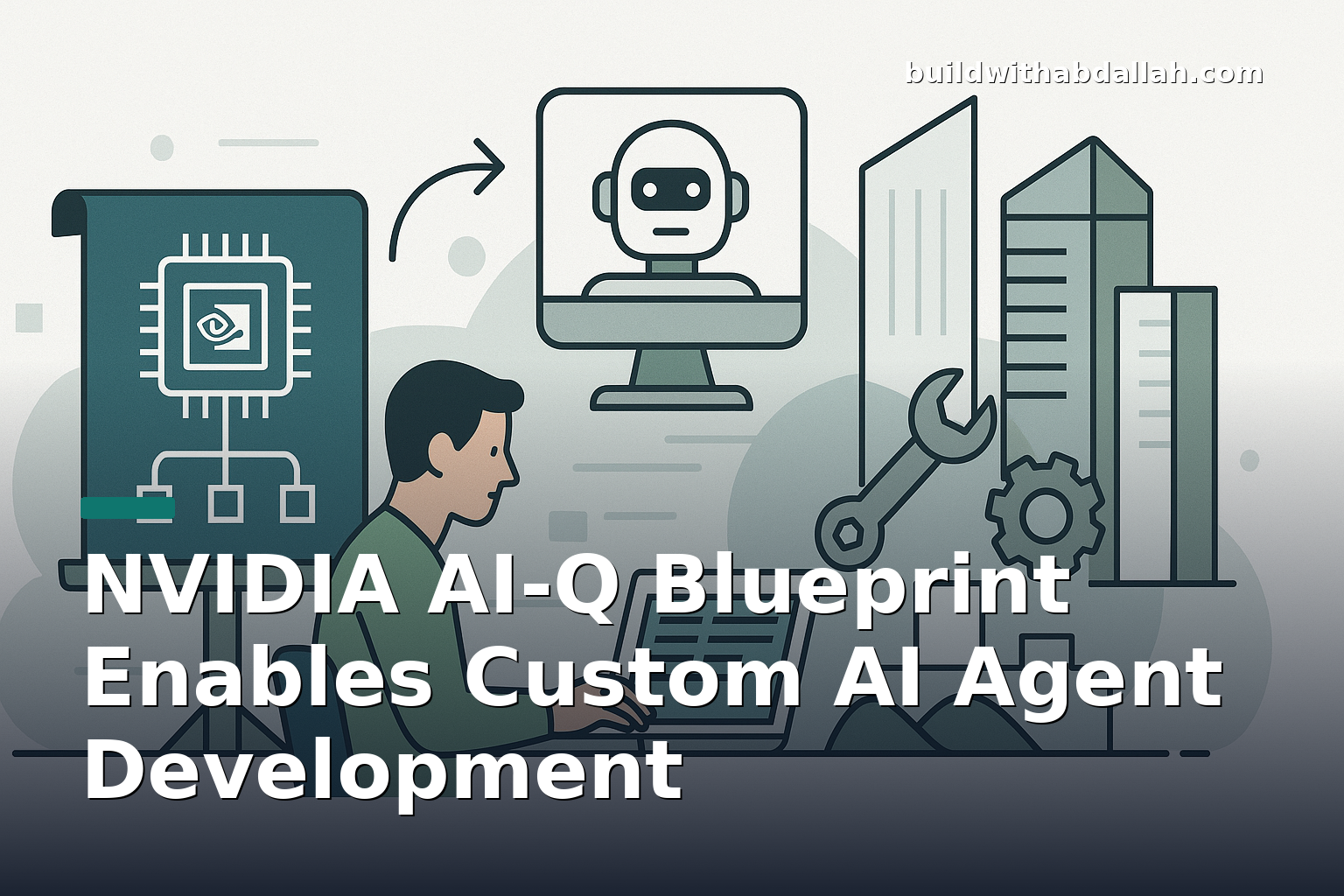
NVIDIA AI-Q Blueprint Enables Custom AI Agent Development
What Happened
NVIDIA has unveiled the AI-Q Blueprint, an open-source platform designed to empower developers to create custom AI agents. This toolkit is part of the NVIDIA Agent Toolkit, which includes the NVIDIA OpenShell runtime and other components to enhance the development of autonomous, self-evolving AI agents. These agents are designed to perceive, reason, and act on enterprise knowledge, providing a significant boost in AI-driven automation and productivity. The AI-Q Blueprint uses a hybrid approach with both frontier and open models, aiming to cut query costs in half and improve accuracy, as evidenced by its performance on the DeepResearch Bench leaderboards.
Why Developers Should Care
The NVIDIA AI-Q Blueprint represents a significant step forward for developers interested in building AI agents that can autonomously handle complex tasks. By providing an open-source platform, NVIDIA is lowering the barrier to entry for developers who wish to integrate AI into their enterprise solutions. The toolkit's focus on safety, security, and efficiency means that developers can build agents that are not only powerful but also reliable and compliant with enterprise standards.
This release is particularly relevant for developers working in industries that require high levels of automation and data analysis, such as healthcare, finance, and logistics. The ability to create AI agents that can autonomously determine how to complete tasks can lead to increased productivity and more efficient use of resources. However, developers should be aware of potential drawbacks, such as the complexity of integrating these agents into existing systems and the need for ongoing maintenance and updates.
Practical Developer Impact
For developers, the NVIDIA AI-Q Blueprint offers a robust set of tools to enhance their projects. The open-source nature of the platform means that developers can customize and extend the capabilities of their AI agents to suit specific business needs. This flexibility is crucial in industries where bespoke solutions can provide a competitive edge. Moreover, the integration of NVIDIA OpenShell ensures that developers can implement policy-based security measures, which are essential for maintaining data integrity and compliance with industry regulations.
The toolkit's hybrid model approach allows developers to leverage both frontier and open models, optimizing for cost and performance. This dual approach ensures that developers can tailor their AI solutions to balance between new capabilities and budget constraints, making it accessible for a wide range of applications.
Real-World Example
Consider a Python developer working in a logistics company that handles large volumes of shipping data. By leveraging the NVIDIA AI-Q Blueprint, the developer can create a custom AI agent that autonomously analyzes shipping routes, predicts potential delays, and suggests optimal alternatives. This agent could integrate with existing systems using APIs to pull real-time data, process it, and provide actionable insights to logistics managers, thereby improving the efficiency of the entire operation.
For Laravel developers, the AI-Q Blueprint could be used to build a custom AI agent that enhances a customer support platform. The agent could autonomously handle common customer queries by analyzing past interactions and providing context-aware responses, freeing up human agents to focus on more complex issues. This not only improves customer satisfaction but also reduces operational costs by streamlining the support process.
Builder's Take
As an independent developer, I'm intrigued by the potential of the NVIDIA AI-Q Blueprint. The promise of creating custom AI agents that can autonomously handle tasks is appealing, especially for industries that rely heavily on data-driven decision-making. However, I'm cautious about the complexity involved in deploying these agents and ensuring they integrate smoothly with existing systems. The open-source nature of the toolkit is a plus, as it allows for community-driven improvements and customization.
What I would test first is the integration capabilities of the AI agents with existing enterprise software. Understanding how these agents interact with various data sources and APIs will be crucial for successful deployment. Additionally, while the toolkit's focus on safety and security is reassuring, I would want to explore the specific guardrails and policies in place to ensure compliance with industry standards.
Moreover, the ability to customize AI agents to specific business needs without compromising on security or performance is a significant advantage. However, the learning curve associated with mastering the toolkit's features and the potential need for specialized knowledge in AI and machine learning could be barriers for some developers.
Sources
- NVIDIA Ignites the Next Industrial Revolution in Knowledge Work With Open Agent Development Platform
What I'll Be Watching
-
Adoption Trends: I'll be keeping an eye on how quickly industries adopt the NVIDIA AI-Q Blueprint and the types of applications that emerge from its use. The speed and breadth of adoption will be telling indicators of the platform's practicality and appeal.
-
Integration Challenges: Monitoring feedback from developers regarding the integration of AI agents with existing systems will be crucial to understanding the platform's practical limitations. Any common challenges or roadblocks could inform future updates or community-driven solutions.
-
Security and Compliance: As more companies deploy AI agents, the effectiveness of NVIDIA's policy-based security measures will be a key area to watch. Ensuring that these agents operate within regulatory frameworks without compromising on functionality will be critical for widespread adoption.
-
Performance Benchmarks: Future updates to the DeepResearch Bench leaderboards will provide insights into the ongoing accuracy and efficiency improvements of AI agents built with the AI-Q Blueprint. Tracking these benchmarks will help developers gauge the platform's competitive standing and potential for innovation.
-
Community Contributions: Given the open-source nature of the AI-Q Blueprint, the contributions from the developer community could significantly enhance the platform's capabilities. I'll be watching for innovative use cases and extensions that emerge from collaborative efforts.