Google I/O 2026: Gemini 3.5 and Antigravity 2.0 Agent Platform Unveiled
What Happened
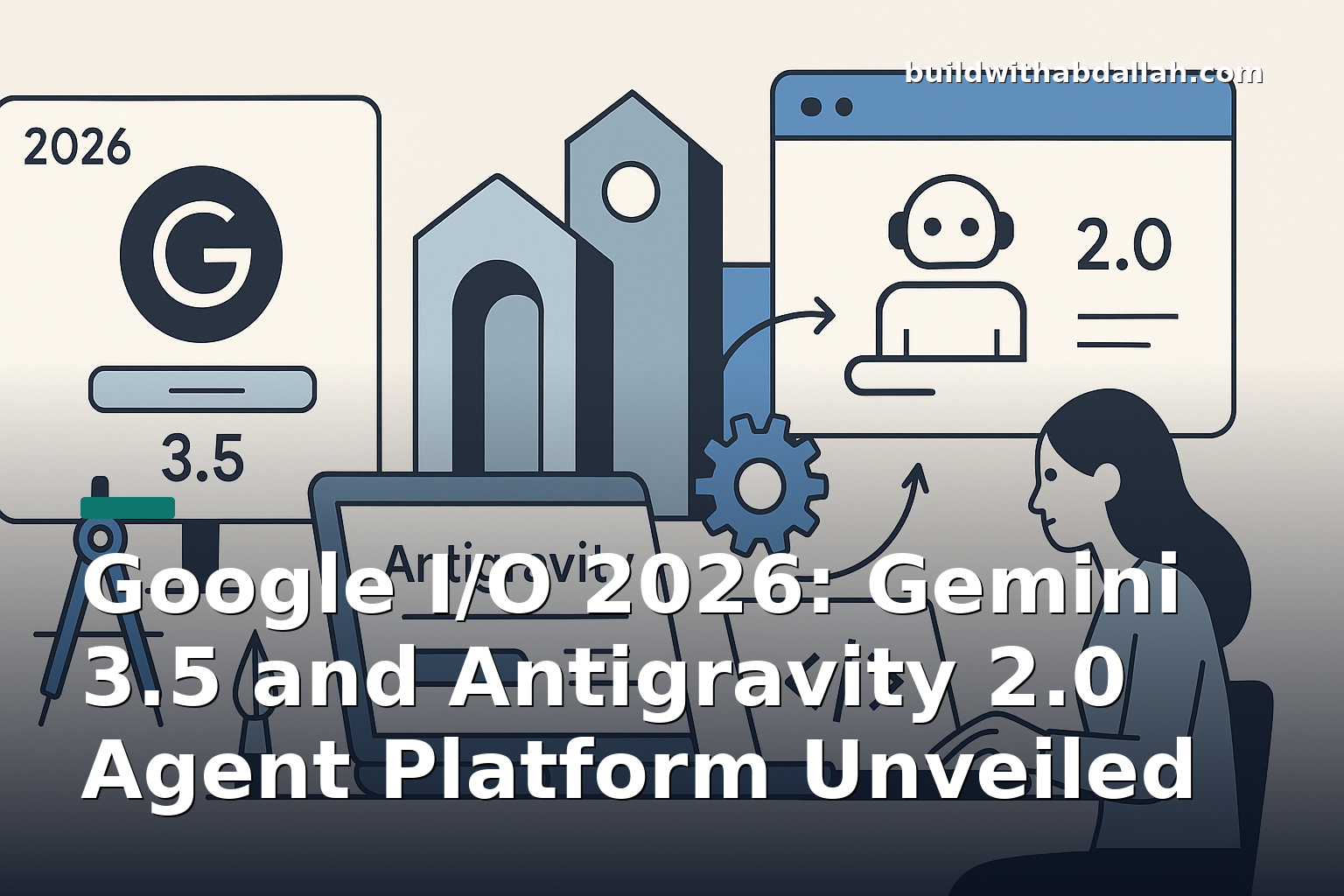
At the Google I/O 2026 Developer Keynote, Google unveiled its latest advancements in AI technology, introducing the Gemini 3.5 series of AI models and the upgraded Antigravity 2.0 platform. These innovations are set to revolutionize the way developers approach the creation of AI agents, empowering them to autonomously navigate and manage complex tasks. The keynote emphasized the integration of new tools and features aimed at simplifying the development of modern Android and web applications, marking a significant shift towards agent-first development.
Why Developers Should Care
The introduction of Gemini 3.5 and Antigravity 2.0 signifies a useful leap in the realm of software development. These tools are designed to enable developers to orchestrate and manage AI agents that can autonomously handle intricate workflows, thus streamlining the development process. The Antigravity 2.0 platform, equipped with a new Command Line Interface (CLI), offers substantial productivity gains by allowing developers to create specialized subagents. These subagents benefit from cross-platform terminal sandboxing, credential masking, and enhanced Git policies, ensuring a secure and efficient development environment.
Google AI Studio's new integrations, including native Kotlin support and one-click deployment to Cloud Run, provide developers with the capability to build full-stack applications seamlessly. The ability to export projects to Google Antigravity further enhances flexibility, allowing developers to transition between platforms with ease. Furthermore, the Gemini API's managed agents simplify infrastructure setup, delivering a fully provisioned agent with a remote sandbox through a single API call. For developers seeking more control, the Antigravity SDK offers the flexibility to customize and deploy agents on personal infrastructure.
The stable Android CLI now integrates with AI agents, leveraging Android Studio's capabilities to facilitate high-quality app development. Open-sourced Android skills are available to guide Large Language Models (LLMs) in executing best practices for complex workflows, such as migrating to Jetpack Compose. The Android Bench leaderboard provides a platform to evaluate AI models' performance on Android development tasks, promoting transparency and competition among developers.
Real-World Example
Consider a scenario where a developer is tasked with migrating a legacy Android app built with React Native to a native Kotlin app. Traditionally, this migration would be labor-intensive, requiring manual code analysis and rewriting. With the new migration agent previewed at Google I/O, this process is drastically simplified. The agent automatically analyzes the existing codebase and performs the necessary transformations, reducing a task that could take weeks to mere hours. This capability allows developers to focus on enhancing app features rather than getting bogged down by tedious migration tasks.
For instance, a small startup aiming to update its mobile application to improve performance and user experience can leverage the migration agent to transition from React Native to Kotlin. This not only saves time and resources but also ensures that the app adheres to the latest Android development standards, ultimately providing a more robust and efficient application for end-users.
Builder's Take
As an independent developer, the potential of Gemini 3.5 and Antigravity 2.0 is intriguing. The ability to deploy managed agents with minimal setup is a significant advantage, particularly for small teams or solo developers who may lack extensive infrastructure resources. The integration with Google AI Studio and the seamless project export to Antigravity are promising for those looking to streamline their development workflows.
However, while the tools offer exciting possibilities, it's essential to approach them with a critical eye. The effectiveness of the migration agent, for instance, will need thorough testing to ensure it handles edge cases and complex code structures accurately. Additionally, while the open-sourced Android skills are a valuable resource, their practical application in diverse real-world scenarios remains to be seen.
Moreover, the introduction of these advanced tools raises questions about the learning curve for developers. While the promise of increased productivity and efficiency is appealing, developers must invest time in understanding and mastering these new technologies. The transition to an agent-first development paradigm may require a shift in mindset and workflow, which could pose challenges for those accustomed to traditional development practices.
Sources
What I'll Be Watching
Going forward, I'll be keeping an eye on the following developments:
-
Gemini 3.5 Model Performance: How well does it perform in real-world applications, particularly in complex task automation? The effectiveness and efficiency of these models in handling diverse tasks will be crucial in determining their adoption and success.
-
Antigravity 2.0 Adoption: Will developers embrace the new CLI and SDK for building and managing AI agents? The community's response and feedback will provide insights into the platform's usability and impact on development workflows.
-
Migration Agent Effectiveness: How accurately does the migration agent handle diverse codebases, and what feedback do developers provide? Understanding its limitations and strengths will be vital for developers considering its use in their projects.
-
Android Bench Leaderboard: The performance of various LLMs on Android development tasks and how this influences model selection for developers. The leaderboard's transparency and competitive nature could drive innovation and improvements in AI models.
-
Developer Community Feedback: The overall reception and feedback from the developer community regarding these new tools and platforms. Engaging with the community will provide valuable insights into the practical challenges and benefits experienced by developers.
These areas will provide valuable insights into the practical impact of Google's latest AI advancements on the developer community. As the technology landscape continues to evolve, staying informed and adaptable will be key for developers looking to leverage these innovations effectively.