Claude Platform Introduces Workload Identity Federation for Keyless Authentication
What Happened
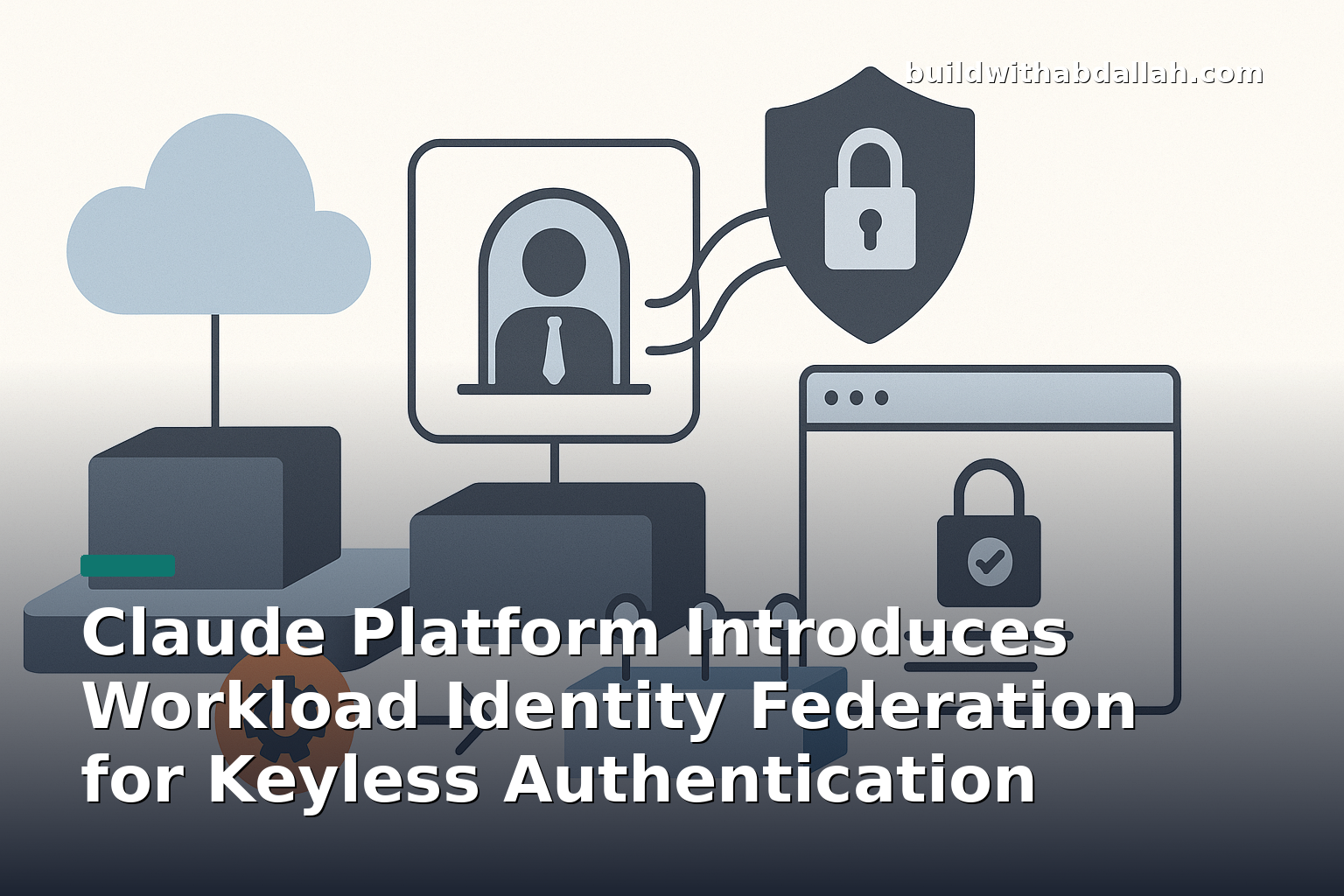
Anthropic has rolled out a new feature for the Claude Platform: Workload Identity Federation for keyless authentication. This update aims to enhance security and simplify authentication processes for developers using the Claude Platform. It allows seamless integration across API endpoints and SDKs without the need for traditional key-based authentication methods.
Why Developers Should Care
For developers, especially those working with cloud-based applications, managing authentication keys can be a cumbersome task. Keys need to be securely stored, rotated, and managed, which can become a hassle, particularly in large-scale deployments. The introduction of Workload Identity Federation eliminates the need for managing these keys by allowing applications to authenticate using identities from trusted identity providers.
This feature is particularly beneficial for developers working in environments that require high security and ease of integration. By leveraging identity federation, developers can improve security by reducing the risk of key exposure and simplify their authentication workflows. This is especially useful for those using Claude's API endpoints and SDKs, as it allows for a more streamlined integration process.
However, there are some considerations to keep in mind. While this update simplifies authentication, it requires a solid understanding of identity management and may necessitate changes in how developers handle authentication in their applications. Additionally, developers need to ensure that their identity providers are supported and properly configured to work with Claude's new system.
Real-World Example
Imagine a team of developers working on a microservices architecture using Laravel and Python. They need to integrate various services with Claude's AI capabilities. Traditionally, they would have to manage API keys for each service, ensuring they are securely stored and regularly rotated.
With Workload Identity Federation, the team can configure their identity provider, such as Okta, to handle authentication. Each microservice can authenticate with Claude using its identity, eliminating the need for managing API keys. This not only enhances security but also reduces the overhead associated with key management. The team can focus on building and deploying their services without worrying about the complexities of key-based authentication.
For instance, consider a scenario where the team is developing an AI-driven customer service chatbot. The chatbot interacts with various internal systems to fetch customer data, process requests, and provide real-time assistance. By implementing Workload Identity Federation, the developers can ensure that each interaction is authenticated through their identity provider, maintaining a high level of security and compliance with organizational policies.
Builder's Take
As an independent developer, I'm intrigued by the potential of Workload Identity Federation. The promise of keyless authentication is appealing, especially for projects where security is paramount. The ability to integrate seamlessly with existing identity providers is a practical solution that can save time and reduce the risk of security breaches.
However, I'm cautious about the initial setup and configuration. Identity federation requires a good grasp of identity management principles, and there might be a learning curve involved. I would start by testing this feature in a controlled environment, ensuring that my identity provider is compatible and that the integration process is smooth.
One limitation I foresee is the dependency on the identity provider. If there's an issue with the provider, it could impact the authentication process. It's crucial to have a backup plan or alternative authentication methods in place. Additionally, the reliance on a single identity provider could pose challenges if the provider's services are disrupted or if there are changes in their policies.
Another aspect to consider is the potential for increased complexity in managing identity provider configurations across different environments. Developers need to ensure that configurations are consistent and properly maintained to avoid any authentication issues during deployment.
Sources
What I'll Be Watching
-
Adoption Rates: I'll be keeping an eye on how quickly developers adopt Workload Identity Federation and whether it becomes a standard practice in the industry. The speed of adoption will be a key indicator of the feature's practicality and effectiveness in real-world scenarios.
-
Integration with Other Identity Providers: Currently, Okta is mentioned as a supported provider. I'll be watching for announcements regarding support for other identity providers, which could broaden the feature's appeal. The inclusion of additional providers like Azure AD, Google Identity, or AWS IAM could significantly enhance the flexibility and reach of this feature.
-
Feedback from the Developer Community: It's important to monitor how developers respond to this update. Are they finding it easy to implement? Are there any common challenges or issues being reported? Community feedback will provide valuable insights into the feature's usability and potential areas for improvement.
-
Security Benchmarks: As with any security-related feature, I'll be interested in seeing any benchmarks or studies that assess the effectiveness of Workload Identity Federation in reducing security risks compared to traditional key-based methods. Understanding how this approach stacks up against established security practices will be crucial in evaluating its long-term viability.
-
Impact on Development Workflows: I'll be observing how this feature influences development workflows, particularly in terms of efficiency and security. Does it streamline processes as intended, or are there unforeseen complexities that arise during implementation?
-
Updates and Enhancements: Finally, I'll be watching for any updates or enhancements to the feature itself. As developers provide feedback and real-world use cases emerge, it's likely that Anthropic will iterate on the feature to address any shortcomings and expand its capabilities.