Anthropic Introduces Claude Corps Amid US Export Control Directive
What Happened
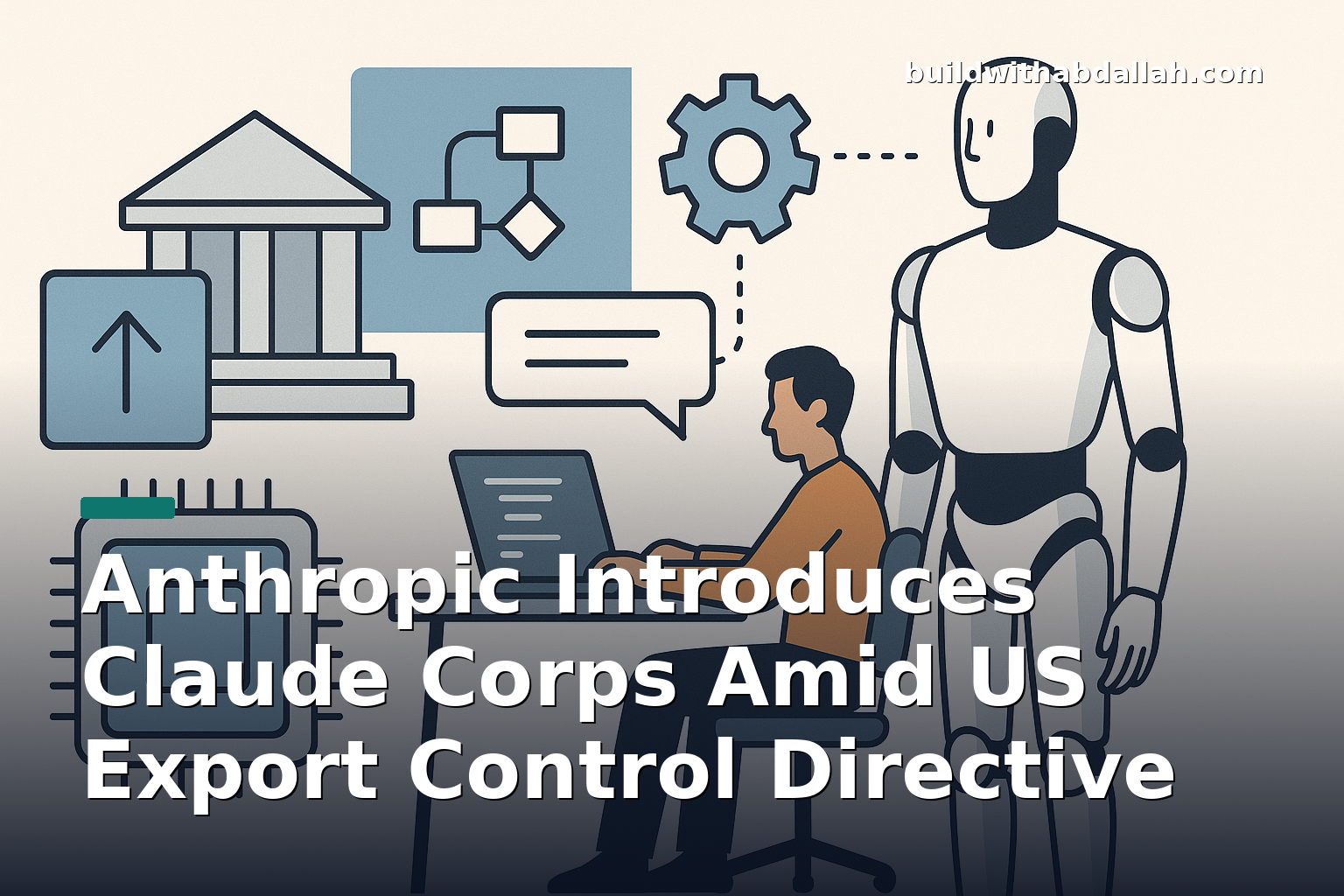
Anthropic, a leading AI research company, has recently launched Claude Corps, a national fellowship program designed to empower individuals early in their careers who are passionate about leveraging artificial intelligence for community benefits across the United States. This initiative is part of Anthropic's broader commitment to fostering socially responsible AI development. However, this announcement comes at a time when the US government has issued an export control directive, suspending access to Anthropic's advanced AI models, Fable 5 and Mythos 5, for foreign users. This directive is part of a broader strategy to regulate the dissemination of AI technologies globally, focusing on security and strategic interests.
Why Developers Should Care
The introduction of Claude Corps and the US export control directive represent significant shifts in the AI landscape, directly impacting developers and organizations involved in AI development and deployment. For developers, Claude Corps offers a unique opportunity to engage with AI technology in a way that emphasizes community impact, potentially steering AI projects towards more socially responsible and locally focused outcomes. This fellowship could serve as a springboard for developers looking to make a tangible difference in their communities through AI.
On the regulatory front, the export control directive underscores the increasing scrutiny AI technologies face, particularly concerning their international availability and security implications. For developers, this means navigating a more complex regulatory environment, especially when working with advanced AI models like Fable 5 and Mythos 5. The directive could limit access to these models for international developers, potentially stifling innovation and collaboration across borders. However, it also presents an opportunity for US-based developers who may benefit from increased access to these models, potentially accelerating domestic advancements in AI.
Practical Developer Impact
For developers, the implications of these developments are multifaceted. The Claude Corps fellowship provides an avenue for developers to access resources, mentorship, and a network of like-minded individuals focused on using AI for social good. This can lead to the creation of innovative solutions that address local challenges, such as improving healthcare delivery, enhancing educational tools, or developing sustainable environmental practices.
Conversely, the export control directive poses a challenge for developers outside the US, who may find themselves cut off from some of the most advanced AI models available. This could necessitate a shift towards alternative models or open-source solutions, which might not offer the same level of sophistication but can still drive innovation. Developers will need to be agile, adapting to these changes by exploring new partnerships or focusing on models that remain accessible.
Real-World Example
Consider a Python developer working on a project that involves natural language processing (NLP) for a community health initiative. With the launch of Claude Corps, this developer could apply for the fellowship to gain access to resources and mentorship that would enhance their project. They could leverage Anthropic's AI models to develop more sophisticated NLP tools that help analyze patient data and improve healthcare delivery in underserved areas.
On the other hand, a developer in Europe working on a similar project might face challenges due to the export control directive, which restricts access to Fable 5 and Mythos 5. This could force them to seek alternative models or collaborate with US-based developers who have access to these resources. Such collaboration could lead to innovative cross-border partnerships, where different perspectives and expertise come together to solve complex problems.
Builder's Take
As an independent developer, the launch of Claude Corps is a promising initiative that aligns with the growing trend of socially responsible tech development. The fellowship could provide valuable opportunities for developers to work on meaningful projects with real-world impact. However, the US export control directive introduces a layer of complexity that developers must navigate, particularly those working in international teams.
While the directive aims to address security concerns, it may inadvertently hinder global collaboration and innovation. It's crucial for developers to stay informed about these regulatory changes and explore alternative models or partnerships to continue their work effectively. Testing the performance and capabilities of Anthropic's models within the US context will be essential to understand their potential fully. Developers should also consider the ethical implications of their work, ensuring that AI technologies are used in ways that benefit society as a whole.
Sources
What I'll Be Watching
-
Claude Corps Fellowship Outcomes: I'll be looking at the projects and innovations that emerge from the Claude Corps fellowship and how they impact local communities. The success stories and challenges faced by fellows will provide valuable insights into the program's effectiveness and areas for improvement.
-
Regulatory Developments: Any changes or updates to the US export control directive and how they affect access to AI models globally will be crucial to monitor. This includes potential shifts in policy that could either tighten or relax restrictions, impacting developers' access to new technologies.
-
AI Model Alternatives: The rise of alternative AI models and their adoption by developers who are affected by the export control directive will be an interesting trend to follow. This could lead to increased innovation in open-source AI models, providing new opportunities for developers worldwide.
-
Impact on International Collaboration: Observing how developers and organizations adapt to the regulatory environment and whether new forms of collaboration emerge will be key in understanding the directive's broader impact. This includes exploring how international partnerships can be fostered despite regulatory barriers, potentially leading to new models of cooperation in the AI field.